
Education 06.10.2026· Article by Maria Jones

How EdTech Helps Students Learn in Their Own Language

How EdTech Helps Students Learn in Their Own Language

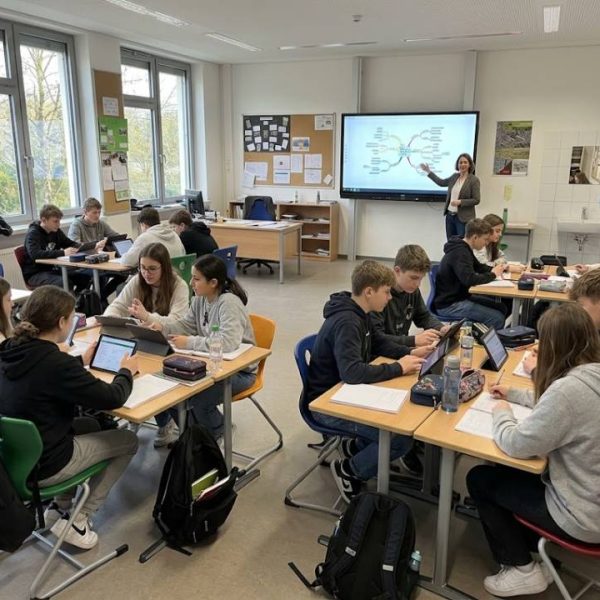
Walk into almost any classroom in a large European or North American city and you will hear several languages. Some students arrived last year, others grew up speaking one language at home and another at school. For teachers, this diversity is enriching but also challenging. How do you make sure every student understands the lesson?

Education technology is part of the answer. When digital tools support students in their own language, they can keep learning while they build skills in the language of instruction.

Why Home Language Matters

Research consistently shows that children learn best when they understand the language of instruction. Students who are still learning that language risk falling behind in maths, science and history, not because they lack ability but because they miss explanations. Using their home language as a bridge helps them keep up while they learn.

UNESCO has long promoted mother tongue-based multilingual education as a way to improve learning outcomes and inclusion.

Learning Platforms in Many Languages

Modern learning management systems and educational apps increasingly offer interfaces and content in multiple languages. Students can switch to a familiar language to read instructions, then return to the main language for tasks. Glossaries with translations of key subject terms help them connect new vocabulary with concepts they already know.

For publishers and EdTech companies, keeping lessons, quizzes and help texts synchronised across many languages is a big task. A translation content management system lets them update a lesson once and send changes to translators automatically, so every language version stays current when the curriculum changes.

Supporting Newly Arrived Students

Since 2022, schools across Europe have welcomed hundreds of thousands of Ukrainian children. Many continued following lessons from Ukrainian online schools in the evening while attending local schools during the day. Teachers needed report cards, medical notes and learning plans translated quickly. Working with an experienced ukrainian english translator helped schools understand previous schooling and place students in the right classes.

Bilingual Education in Canada

Canada offers a different example. French immersion programmes are popular across English-speaking provinces, and schools need high-quality materials in both languages. Educational publishers and school boards regularly use professional english to french translation services to adapt textbooks, digital lessons and parent communication, making sure the French reflects Canadian usage.

Connecting With Parents

Parents who do not speak the school language often feel excluded. They miss newsletters, cannot follow homework and hesitate to attend meetings. Parent communication apps with automatic translation have made a real difference, allowing teachers to send messages that parents read in their own language and reply to in theirs.

For important documents, such as special education plans or disciplinary procedures, schools should still rely on professional translation, because accuracy matters for families' rights.

School districts that need these translations regularly often contract dedicated translation services rather than handling requests one by one. These providers translate report cards, individual education plans, and disciplinary notices with the precision legal documents require. They also keep glossaries of school terminology so wording stays consistent across the year. For a district serving dozens of language communities, that reliability protects both families' rights and the school's compliance.

AI Tutors and Speech Tools

Artificial intelligence opens new possibilities. Reading assistants can read text aloud, translate difficult words or simplify sentences. Speech recognition helps students practise pronunciation. AI tutors can explain a maths concept in a student's home language and then again in the language of instruction.

These tools need careful use. Teachers must check quality, protect student data and make sure technology supports learning rather than replacing human relationships.

Challenges to Keep in Mind

  • Not all languages are supported equally well by digital tools.
  • Automatic translation can make mistakes with subject-specific terms.
  • Students need access to devices and reliable internet at home.
  • Teachers need training to integrate multilingual tools effectively.
  • Data protection rules must be respected, especially for minors.

Practical Tips for Schools

Start by mapping the languages spoken in your school. Choose platforms that support those languages well. Create subject glossaries with key terms in the main languages. Train staff on how to use translation features, and involve multilingual parents and community members as language ambassadors.

Celebrating Multilingualism

Multilingual classrooms are not a problem to be solved, they are a resource. Students who speak several languages bring different perspectives, and classmates benefit from exposure to other cultures. Digital tools can help showcase this, for example through multilingual class blogs, storytelling projects or international e-twinning with schools abroad.

Assessment in More Than One Language

Testing is another area where language can hide real ability. A student who understands photosynthesis perfectly may fail a science quiz simply because the question uses unfamiliar vocabulary. Some digital assessment tools now allow teachers to offer glossaries, read-aloud options or bilingual versions of questions during the early stages of language learning. This gives a fairer picture of what students actually know and helps teachers plan the right support.

Teacher Professional Development

Technology works best when teachers feel confident using it. Short, practical training sessions on multilingual features, accessibility settings and data protection make a big difference. Schools that create time for teachers to share what works, from useful apps to classroom routines, build a culture where every student's language is seen as a strength rather than an obstacle.

Learning Without Barriers

Technology alone will not solve every challenge, but it can remove many barriers. When students can learn in a language they understand, they gain confidence, stay engaged and are far more likely to succeed.

Walk into almost any classroom in a large European or North American city and you will hear several languages. Some students arrived last year, others grew up speaking one language at home and another at school. For teachers, this diversity is enriching but also challenging. How do you make sure every student understands the lesson?

Walk into almost any classroom in a large European or North American city and you will hear several languages. Some students arrived last year, others grew up speaking one language at home and another at school. For teachers, this diversity is enriching but also challenging. How do you make sure every student understands the lesson?

Education technology is part of the answer. When digital tools support students in their own language, they can keep learning while they build skills in the language of instruction.

Education technology is part of the answer. When digital tools support students in their own language, they can keep learning while they build skills in the language of instruction.

Why Home Language Matters

Research consistently shows that children learn best when they understand the language of instruction. Students who are still learning that language risk falling behind in maths, science and history, not because they lack ability but because they miss explanations. Using their home language as a bridge helps them keep up while they learn.

Research consistently shows that children learn best when they understand the language of instruction. Students who are still learning that language risk falling behind in maths, science and history, not because they lack ability but because they miss explanations. Using their home language as a bridge helps them keep up while they learn.

UNESCO has long promoted mother tongue-based multilingual education as a way to improve learning outcomes and inclusion.

UNESCO has long promoted mother tongue-based multilingual education as a way to improve learning outcomes and inclusion.

Learning Platforms in Many Languages

Modern learning management systems and educational apps increasingly offer interfaces and content in multiple languages. Students can switch to a familiar language to read instructions, then return to the main language for tasks. Glossaries with translations of key subject terms help them connect new vocabulary with concepts they already know.

Modern learning management systems and educational apps increasingly offer interfaces and content in multiple languages. Students can switch to a familiar language to read instructions, then return to the main language for tasks. Glossaries with translations of key subject terms help them connect new vocabulary with concepts they already know.

For publishers and EdTech companies, keeping lessons, quizzes and help texts synchronised across many languages is a big task. A translation content management system lets them update a lesson once and send changes to translators automatically, so every language version stays current when the curriculum changes.

For publishers and EdTech companies, keeping lessons, quizzes and help texts synchronised across many languages is a big task. A translation content management system lets them update a lesson once and send changes to translators automatically, so every language version stays current when the curriculum changes.

Supporting Newly Arrived Students

Since 2022, schools across Europe have welcomed hundreds of thousands of Ukrainian children. Many continued following lessons from Ukrainian online schools in the evening while attending local schools during the day. Teachers needed report cards, medical notes and learning plans translated quickly. Working with an experienced ukrainian english translator helped schools understand previous schooling and place students in the right classes.

Since 2022, schools across Europe have welcomed hundreds of thousands of Ukrainian children. Many continued following lessons from Ukrainian online schools in the evening while attending local schools during the day. Teachers needed report cards, medical notes and learning plans translated quickly. Working with an experienced ukrainian english translator helped schools understand previous schooling and place students in the right classes.

Bilingual Education in Canada

Canada offers a different example. French immersion programmes are popular across English-speaking provinces, and schools need high-quality materials in both languages. Educational publishers and school boards regularly use professional english to french translation services to adapt textbooks, digital lessons and parent communication, making sure the French reflects Canadian usage.

Canada offers a different example. French immersion programmes are popular across English-speaking provinces, and schools need high-quality materials in both languages. Educational publishers and school boards regularly use professional english to french translation services to adapt textbooks, digital lessons and parent communication, making sure the French reflects Canadian usage.

Connecting With Parents

Parents who do not speak the school language often feel excluded. They miss newsletters, cannot follow homework and hesitate to attend meetings. Parent communication apps with automatic translation have made a real difference, allowing teachers to send messages that parents read in their own language and reply to in theirs.

Parents who do not speak the school language often feel excluded. They miss newsletters, cannot follow homework and hesitate to attend meetings. Parent communication apps with automatic translation have made a real difference, allowing teachers to send messages that parents read in their own language and reply to in theirs.

For important documents, such as special education plans or disciplinary procedures, schools should still rely on professional translation, because accuracy matters for families' rights.

For important documents, such as special education plans or disciplinary procedures, schools should still rely on professional translation, because accuracy matters for families' rights.

AI Tutors and Speech Tools

Artificial intelligence opens new possibilities. Reading assistants can read text aloud, translate difficult words or simplify sentences. Speech recognition helps students practise pronunciation. AI tutors can explain a maths concept in a student's home language and then again in the language of instruction.

Artificial intelligence opens new possibilities. Reading assistants can read text aloud, translate difficult words or simplify sentences. Speech recognition helps students practise pronunciation. AI tutors can explain a maths concept in a student's home language and then again in the language of instruction.

These tools need careful use. Teachers must check quality, protect student data and make sure technology supports learning rather than replacing human relationships.

Challenges to Keep in Mind

  • Not all languages are supported equally well by digital tools.
  • Automatic translation can make mistakes with subject-specific terms.
  • Students need access to devices and reliable internet at home.
  • Teachers need training to integrate multilingual tools effectively.
  • Data protection rules must be respected, especially for minors.

Practical Tips for Schools

Start by mapping the languages spoken in your school. Choose platforms that support those languages well. Create subject glossaries with key terms in the main languages. Train staff on how to use translation features, and involve multilingual parents and community members as language ambassadors.

Start by mapping the languages spoken in your school. Choose platforms that support those languages well. Create subject glossaries with key terms in the main languages. Train staff on how to use translation features, and involve multilingual parents and community members as language ambassadors.

Celebrating Multilingualism

Multilingual classrooms are not a problem to be solved, they are a resource. Students who speak several languages bring different perspectives, and classmates benefit from exposure to other cultures. Digital tools can help showcase this, for example through multilingual class blogs, storytelling projects or international e-twinning with schools abroad.

Multilingual classrooms are not a problem to be solved, they are a resource. Students who speak several languages bring different perspectives, and classmates benefit from exposure to other cultures. Digital tools can help showcase this, for example through multilingual class blogs, storytelling projects or international e-twinning with schools abroad.

Assessment in More Than One Language

Testing is another area where language can hide real ability. A student who understands photosynthesis perfectly may fail a science quiz simply because the question uses unfamiliar vocabulary. Some digital assessment tools now allow teachers to offer glossaries, read-aloud options or bilingual versions of questions during the early stages of language learning. This gives a fairer picture of what students actually know and helps teachers plan the right support.

Testing is another area where language can hide real ability. A student who understands photosynthesis perfectly may fail a science quiz simply because the question uses unfamiliar vocabulary. Some digital assessment tools now allow teachers to offer glossaries, read-aloud options or bilingual versions of questions during the early stages of language learning. This gives a fairer picture of what students actually know and helps teachers plan the right support.

Teacher Professional Development

Technology works best when teachers feel confident using it. Short, practical training sessions on multilingual features, accessibility settings and data protection make a big difference. Schools that create time for teachers to share what works, from useful apps to classroom routines, build a culture where every student's language is seen as a strength rather than an obstacle.

Technology works best when teachers feel confident using it. Short, practical training sessions on multilingual features, accessibility settings and data protection make a big difference. Schools that create time for teachers to share what works, from useful apps to classroom routines, build a culture where every student's language is seen as a strength rather than an obstacle.

Learning Without Barriers

Technology alone will not solve every challenge, but it can remove many barriers. When students can learn in a language they understand, they gain confidence, stay engaged and are far more likely to succeed.

Technology alone will not solve every challenge, but it can remove many barriers. When students can learn in a language they understand, they gain confidence, stay engaged and are far more likely to succeed.